


Screenshots
Available on streaming


Torrents(7)

Arriving
The first episode examines the various methods by which creatures come into the world. Attenborough’s opening statement alludes to the annual spawning of the Christmas Island red crab, of which there are estimated to be some 120 million. The exercise is all the more hazardous since the species is a land crab, and the eggs have to be deposited in the sea - where the most ancient animals on the planet still live and breed. One of the most prolific aquatic egg producers is the giant clam, but some
Growing Up
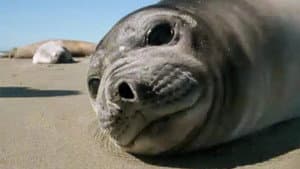
This programme describes the ways that various species care for their young. Attenborough defines childhood as achieving two tasks: growing and surviving. He highlights the elephant seal as an animal that experiences a compressed childhood, being abandoned after three weeks and left for up to another eight alone, while it becomes large enough to be able to swim. For terns, there is safety in numbers as the dense population works together to drive out marauding gulls. The snow geese in the Russia

Finding Food
The next installment is devoted to the ways in which animals gather their sustenance. Attenborough begins in the South American rainforest, where the proliferation of animal and plant life does not necessarily make it easy to find food. Some leaves are poisonous, and so those that eat them have to be careful. Other plants use food (or nectar) as a bribe to get their pollen transported, and several species of hummingbird have developed exclusive relationships with certain of them. Fruit is also o

Hunting and Escaping
This episode looks at those that hunt other creatures and ways of avoiding capture. Attenborough is attacked by a pair of skuas as he approaches their nest, which demonstrates this particular bird's aggressive behaviour, both when taking food and defending its young. Off the shores of Patagonia, the same group of killer whales returns each year to ambush sea lion pups, which stray out of the safer shallow waters. Having grabbed their prey, they take it back out to sea and 'play' with it for some

Finding the Way
This programme explores forms of navigation. Attenborough starts in Africa at dusk, by describing some of the species that don't rely on sight. The spotted hyena uses its acute sense of smell to guide it while it hunts nocturnally, while galagos urinate on their hands so they can completely mark their movements. Some animals use echolocation and these include swiftlets, bats and river dolphins. By contrast, electric eels use fields of electricity to sense their environment. During the hours of d

Home Making
This installment deals with how animals construct their shelters from the elements and predators. Burrows and holes can provide considerable refuge, and Attenborough inspects the home of the American prairie dog, an elaborate construction that has its own air conditioning system. Silk is such a valuable commodity that those that can't make it steal it instead. The hermit hummingbird uses it to attach its nest to the underside of a leaf, while the Indian tailorbird stitches two leaves together. H

Living Together
This episode focuses on those species that co-operate and depend on (or exploit) others. Spotted deer follow langur monkeys as they travel from tree to tree, eating any leaves that get dropped from above. In return, the deer serve as a lookout when the primates are feeding on the ground. Underwater, a hermit crab is shown adding sea anemones to its shell in order to protect itself from attack by an octopus, and a goby assists a virtually blind shrimp. Fleas, lice and mites are parasites: they sh

Fighting
This programme details how fighting - both physical and psychological - is used for food, land or to gain a mate. Territorial conflict is demonstrated by the hummingbird, and Attenborough illustrates its aggressiveness by placing a stuffed specimen nearby, only to have it speared by its opponent's bill. The midas cichlid on the other hand, has no weapons to speak of, and so uses its mouth to hold on for trials of strength. By contrast, the forelegs of a mantis shrimp are powerful enough to crack

Friends and Rivals
This installment investigates the ways in which those animals that live in social groups interact with each other. The solitary eagle is contrasted with whooper swans landing in Scotland after a 1,600-kilometre journey from Iceland. Once arrived, they must battle for territory with those already there, and pairs or families are usually victorious. Attenborough uses a group of farmyard chickens to demonstrate a pecking order. A pride of lions is shown co-operating to subdue a buffalo. Afterwards,

Talking to Strangers
This episode concentrates on communication. In Kenya, Attenborough accompanies a tribesman who calls to a honeyguide, which in turn answers him and leads the pair to a bees' nest. The tribesman extracts the honey, and some is left to reward the bird. African hunting dogs are shown hunting gazelles, of which the target is the individual that leaps lowest. Larks evade merlin by sending a similar message: by continuing to sing while being chased, it tells the pursuer that its prey is fit and theref
Courting
This programme surveys the methods employed in attracting a mate, mainly those of birds. The Indian florican inhabits long grass, and so is difficult to see. In order to gain attention, it 'trampolines' in the same spot for up to 400 times a day. Whales sing to their prospective partners, and the female's calls can be heard by suitors for over eight kilometres. When animals send out signals of attraction, they must also ensure that they don't entice the wrong species, and so have markings that d

Continuing the Line
The final installment illustrates how species fulfill their ultimate raison d'être and ensure that their genes are passed on to the next generation. It is a universal problem, but one which has given rise to a variety of solutions. Barnacles cannot move, but each has both male and female sex cells, allowing each neighbour to be a potential mate. On the other end of the scale, a female elephant undergoes a long pregnancy - 22 months - and so wishes to ensure that her calf is fathered by a strong
You Might Also Like





Downloading copyrighted material without owning a legal copy may be illegal in your country. TorrentClaw indexes publicly available metadata and does not host any files. Users are solely responsible for ensuring their use of torrent links complies with applicable laws.
Comments
Log in with a verified email to comment.
Loading comments...